Mountain Driving Safety: Dealing with De-Icer and Gravel
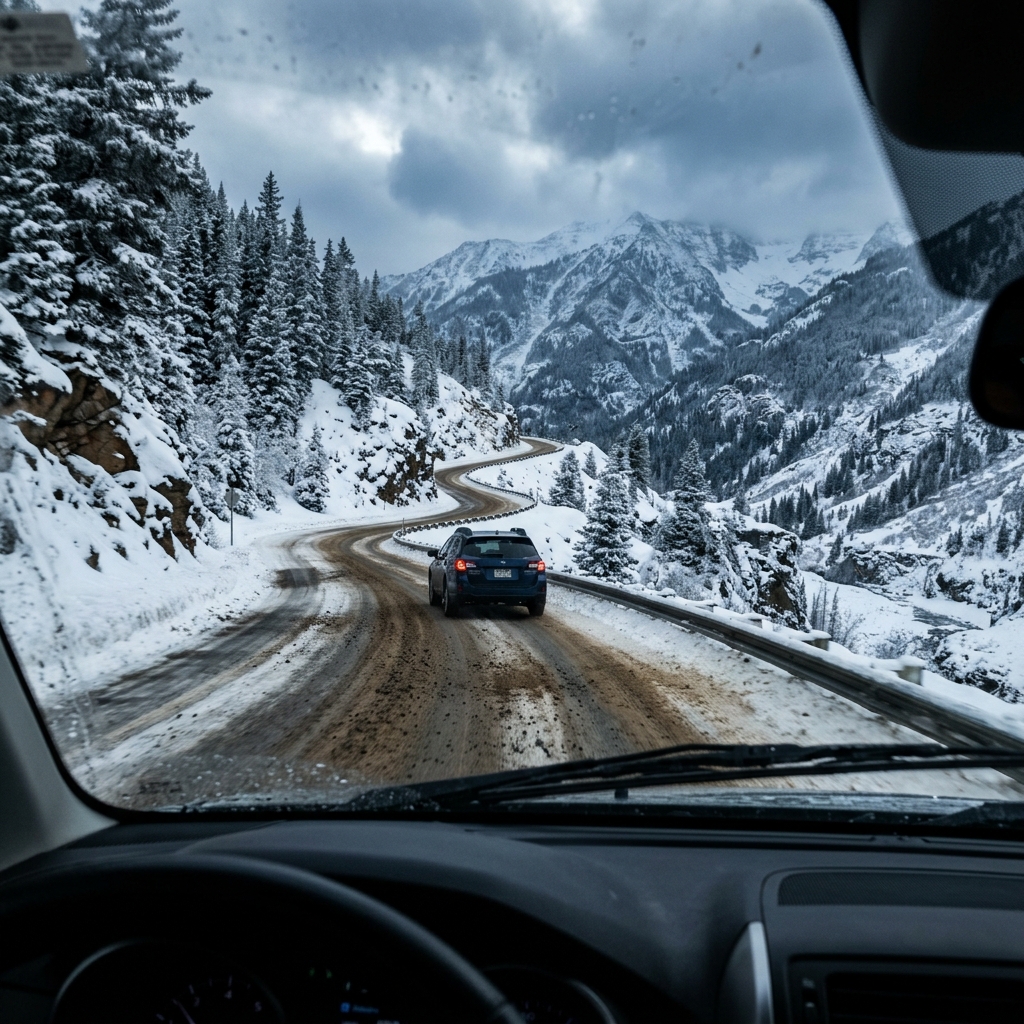
Driving in the Rockies is a ritual for many Denver residents, but our mountain roads present unique challenges to your auto glass longevity. From the gravel used for traction to the chemical de-icers applied to the asphalt, your windshield is on the front lines.
The "Gravel Rain" Effect
Following a snowstorm, the sand and gravel used by CDOT for traction becomes a projectile hazard as the roads dry. Maintaining a safe following distance—at least 4 cars back—significantly reduces your risk of taking a direct hit from a truck's tires.
Chemical De-Icers and Seal Degradation
Magnesium Chloride and other de-icers are great for melting ice but can be harsh on the rubber seals and moldings around your windshield. Regularly washing your car, particularly the area around the glass edges, helps prevent these chemicals from eating away at the protective barriers that keep water and wind out.
The "Sun Crater" Myth
Many people believe that the "pits" on their windshield are just from rocks. While rocks cause the big ones, the thousands of tiny pits are often caused by "abrasive blasting" from sand and dust at highway speeds. Over time, these pits make the glass harder to clean and increase glare.
Need precision glass work?
Request your mobile estimate in under 60 seconds.