Sun Glares and Safety: The High Altitude UV Effect
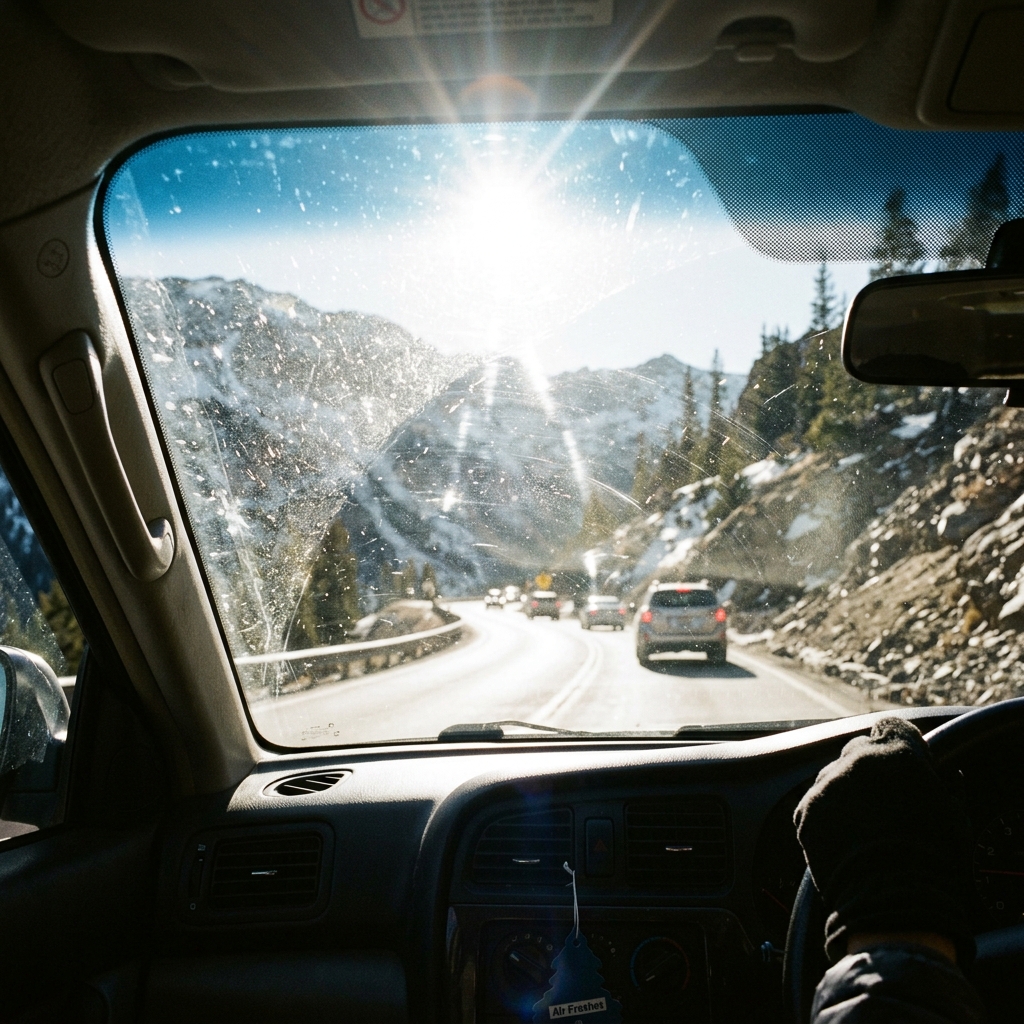
Did you know that for every 1,000 feet of elevation gain, UV intensity increases by about 10-12%? In Denver and the surrounding peaks, our glass is being hit by significantly more solar radiation than sea-level vehicles.
UV Damage to Urethane and Primers
Over years, intense UV can attempt to break down the bond between your glass and your vehicle. This is why we use high-grade "blackout" primers that act as a literal sunscreen for the urethane bond. Standard primers often fail prematurely in high-altitude environments, leading to air whistles and water leaks.
Interior Protection
Your windshield is the largest window into your car's interior. Quality glass often includes a UV-blocking interlayer that protects your dashboard and upholstery from cracking and fading. When we manage a replacement, we ensure the glass provides the specific UV protection your vehicle's manufacturer intended.
The "Ghost Glow" on Old Glass
If you notice a hazy "glow" around streetlights or the sun, even after a thorough cleaning, your glass may be "sandblasted" from years of high-altitude driving. This isn't just a cosmetic issue; it's a safety concern that significantly increases driver fatigue during long commutes.
Need precision glass work?
Request your mobile estimate in under 60 seconds.